


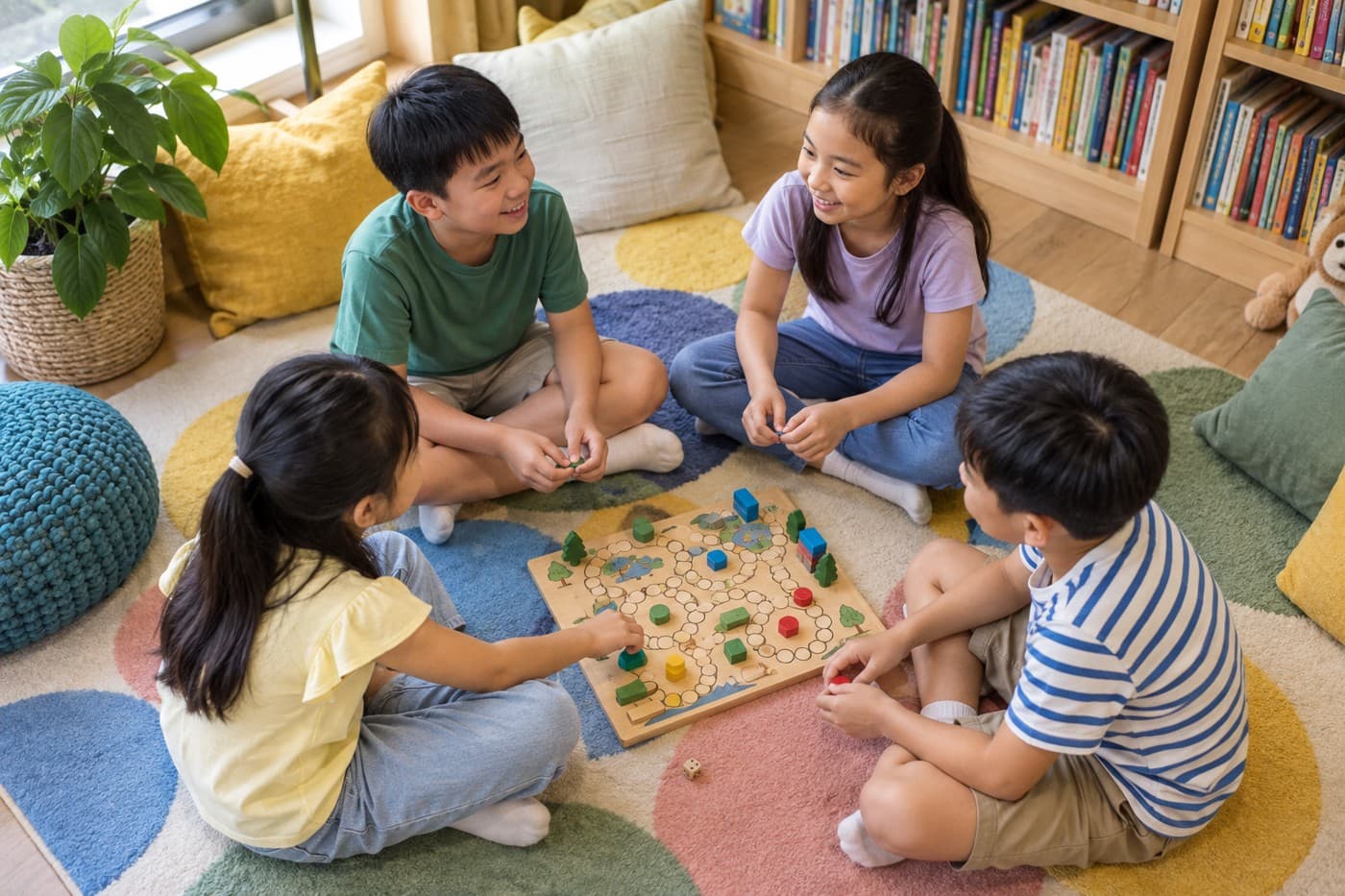
A useful Primary 1 after-school routine starts with the basics: arrive safely, eat, decompress, handle essential schoolwork in manageable blocks and leave time for movement or play. The best timetable is not the busiest one. It is the one your child can follow without reaching the evening exhausted.
Plan the practical details before school starts
Write down the school's usual dismissal time, known CCA days, travel time, meal arrangements and the latest collection time your family can manage. Decide who receives school notices and who the school or after-school provider should contact when plans change.
If another adult or a centre will collect your child, practise the handover. Your child should know who to look for, where to wait and what to do if the expected person is not there. Keep the explanation short enough to remember.
A simple afternoon rhythm
1. Arrive and reset
Give children a clear arrival routine: put away belongings, wash up, drink water and check what needs attention. Predictable first steps reduce the number of decisions they have to make when tired.
2. Eat before demanding focused work
Check when your child last ate at school. Hunger can look like poor concentration or irritability. Ask providers what meal or snack is served, when it is served and how dietary needs are handled.
3. Allow a short decompression period
Some children want to talk immediately; others need quiet. A short break, reading time or gentle play can make the next task easier. Decompression should not turn into an unplanned hour of passive screen time.
4. Use manageable homework blocks
Primary 1 children are still learning how to organise worksheets, follow written instructions and ask for help. Break work into short blocks and include a clear stopping point. If an after-school programme supports homework, ask whether staff supervise, check, correct or teach.
5. Keep room for movement and play
School and homework already require long periods of sitting. Movement, creative activities and conversation give children another way to use their attention and spend time with peers.
6. Protect the evening
When possible, avoid carrying an overloaded schedule into bedtime. The evening still needs space for dinner, packing the school bag, a calm conversation and enough sleep.
Set clear homework expectations
Parents and providers may use “homework help” to mean different things. Agree on who checks the school diary, who confirms completion, whether mistakes are corrected and how unfinished work is reported. A simple update is more useful than finding a missing worksheet late in the evening.
The goal in Primary 1 is not only to finish each page. Children are also learning to recognise instructions, keep track of belongings and attempt a task before asking an adult to solve it. Build independence gradually rather than expecting it in the first week.
Compare after-school arrangements against your real week
A school-based Student Care Centre, a community-based centre, a caregiver at home or an enrichment-led after-school programme can each work for different families. Compare eligibility, transport, hours, meals, homework support, holidays, fees, communication and the amount of rest or play.
The Ministry of Education's student care page explains the school-based option and points families toward community-based centres. If fee assistance is important, use MSF's current SCFA information and verify the provider's status.
Review the routine during the first two weeks
Watch for patterns rather than judging one difficult afternoon. Is your child regularly very hungry, unable to settle, carrying unfinished work home or dreading a particular transition? Ask the teacher or care provider what they see at the same time of day.
Change one part of the routine at a time. An earlier snack, shorter homework block or quieter arrival period may help more than replacing the whole arrangement. Keep notes brief and practical so everyone involved can respond consistently.
Official references
For current student care definitions and fee-assistance information, refer to the MOE student care page and MSF student care information.